Nano Masters AI Rail Transportation
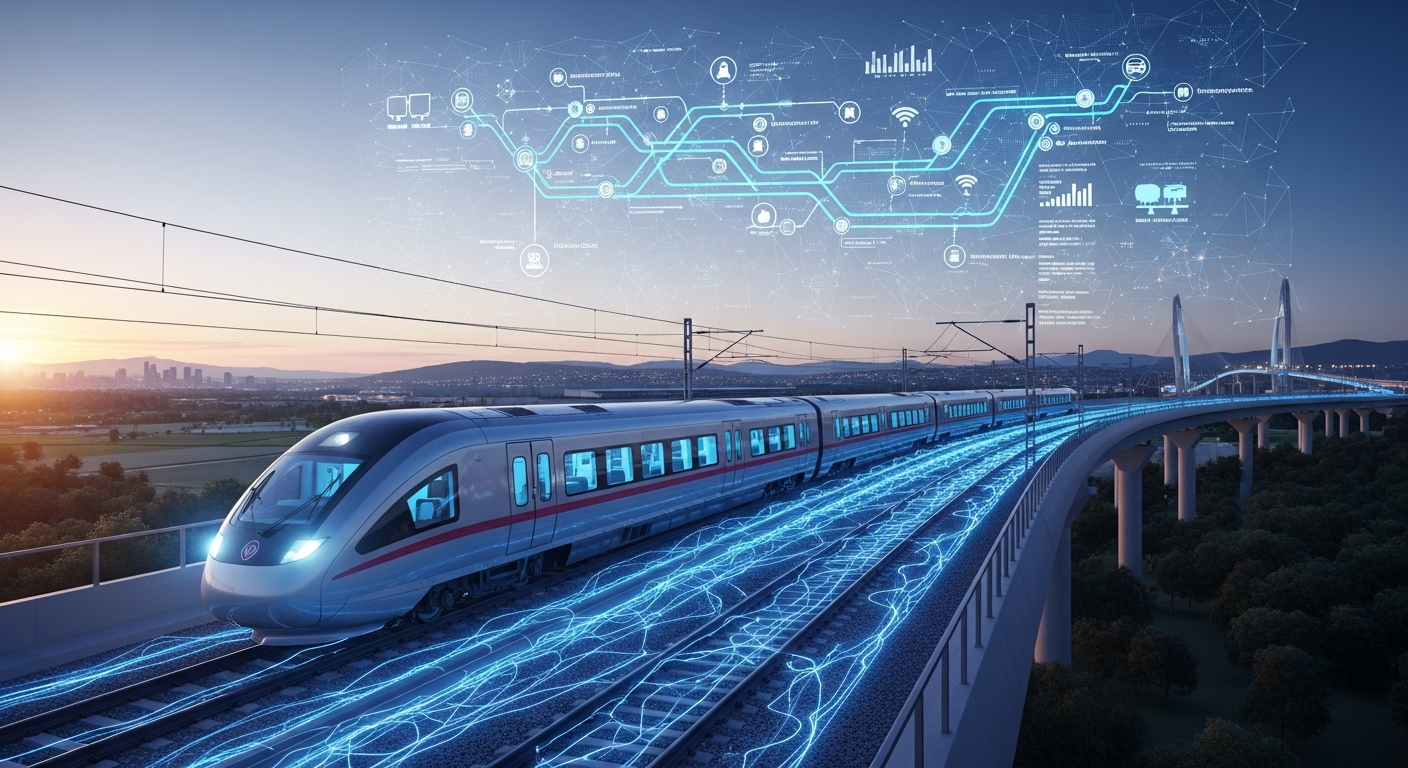
Nano Masters AI Rail Transportation is a technology-driven rail operator that uses artificial intelligence to optimize train scheduling, routing, and maintenance. The company focuses on improving network efficiency, reducing delays, enhancing safety through predictive monitoring, and lowering operating costs with data-driven automation across freight and passenger rail services.
About Nano Masters AI Rail Transportation
Nano Masters AI Rail Transportation is a Spain-based rail operator built around an AI-first operating philosophy. The company combines railway domain expertise with large-scale data engineering to make day-to-day network decisions faster, safer, and more consistent. Across passenger and freight services, Nano Masters applies machine learning to timetable planning, real-time dispatching, and disruption recovery. By continuously evaluating constraints—track capacity, rolling stock availability, crew rules, station dwell times, and demand patterns—the operator can reduce knock-on delays and improve on-time performance. Safety and asset reliability are strengthened through predictive monitoring. Sensor and inspection data are used to anticipate failures in rolling stock and key infrastructure interfaces, helping maintenance teams prioritize work, reduce unplanned downtime, and extend component life. The organization also focuses on cost and sustainability outcomes. Data-driven automation supports energy-efficient driving strategies, better utilization of assets, and streamlined back-office processes, enabling scalable operations while maintaining service quality. With a workforce of approximately 20,000 employees, Nano Masters AI Rail Transportation blends operational rigor with continuous improvement, partnering with public stakeholders, shippers, and mobility providers to modernize rail performance at network scale.
What we offer
Passenger and freight rail operations supported by AI-enabled network planning, real-time traffic management, disruption recovery, predictive maintenance, condition monitoring, and automated performance analytics. Services include timetable optimization, routing and slot allocation, rolling-stock and crew planning, maintenance planning, and operations dashboards for control centers.
Who we serve
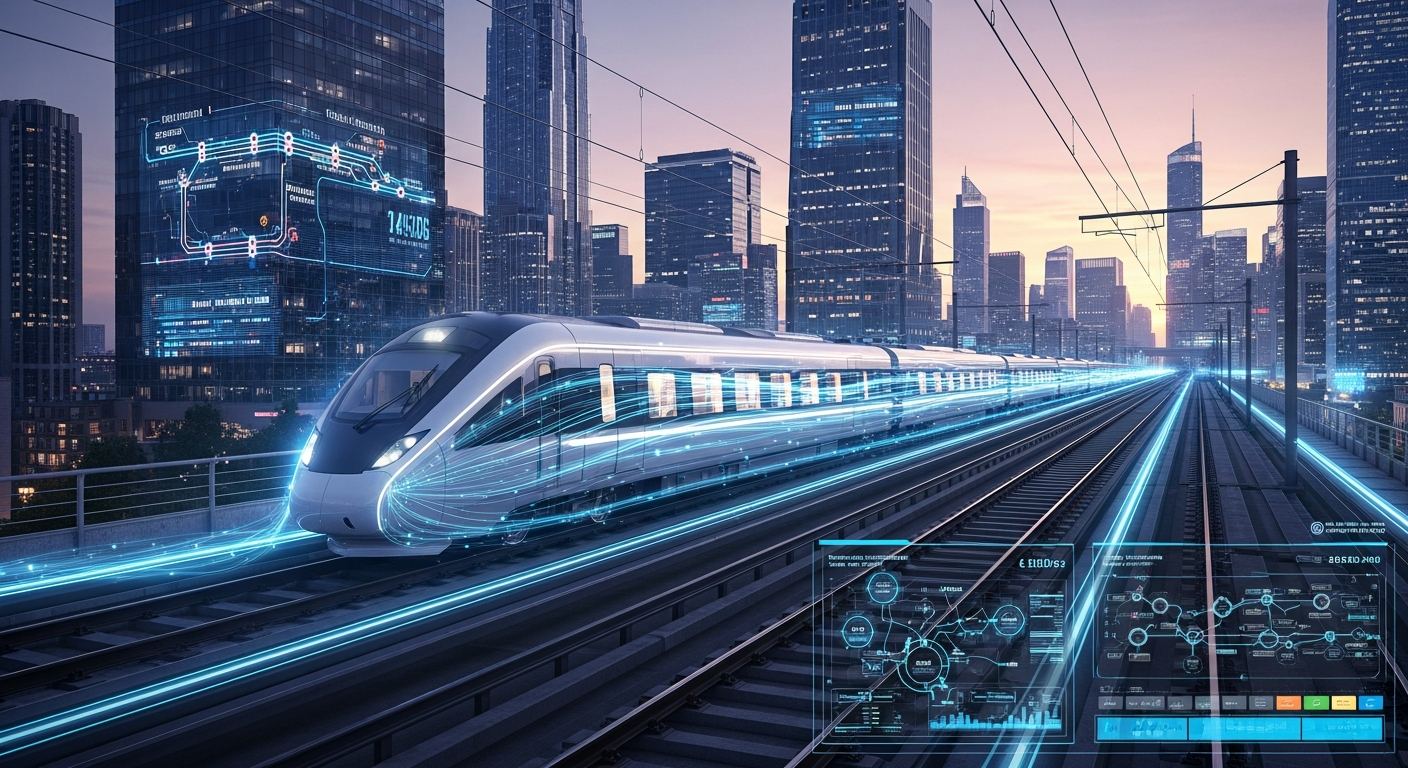
The company serves a dual market: passengers using regional and intercity rail services, and commercial shippers requiring reliable freight capacity. Target customers include public transport authorities, mobility partners, logistics providers, industrial shippers, and intermodal terminal operators seeking punctual, high-throughput rail service with transparent performance reporting.

Inside the business
Nano Masters AI Rail Transportation runs a tightly integrated operating system that connects planning, dispatch, maintenance, and customer commitments. Decisions are continuously refreshed using real-time network data and predictive models to keep service stable under changing conditions.
Operating model
The operating model combines centralized network control with data-driven local execution. Strategic planning sets service patterns and capacity plans; operational control centers manage real-time movements and disruption response; maintenance teams execute predictive work orders prioritized by risk and service impact. AI models ingest telemetry, infrastructure constraints, demand signals, and historical performance to recommend schedules, routing, and maintenance windows, with human-in-the-loop governance for safety-critical decisions.
Market dynamics
Spain’s rail sector faces rising expectations for punctuality, capacity, and sustainability while operating within constrained infrastructure windows and complex stakeholder requirements. Competition from road and air, volatility in freight demand, and climate-related disruptions increase the value of resilient operations. Regulatory oversight and public accountability elevate the importance of safety, transparent KPIs, and equitable service coverage, pushing operators toward digitization and automation to deliver more with existing assets.
What changed recently (fictional)
Nano Masters AI Rail Transportation has accelerated deployment of predictive maintenance workflows and expanded real-time dispatch optimization to cover more corridors. The company has also strengthened performance reporting for stakeholders, increased integration between maintenance and operations planning, and scaled data governance practices to support larger model portfolios and auditability.
Key performance metrics (KPIs)
These KPIs reflect what leaders typically track in Rail Transportation. Each metric connects to decisions that drive outcomes.
Decision scenarios (what leaders actually face)
The scenarios below are written to resemble realistic situations in Rail Transportation. They’re designed for practice, discussion, and evaluation — where context, trade-offs, and escalation matter.
A signaling fault reduces capacity on a key corridor during peak hours, causing cascading delays across passenger and freight services. Operations must choose a recovery strategy that balances customer impact, safety, and network stability.
What this scenario reveals
How the company evaluates trade-offs among service obligations, total network delay, stakeholder commitments, and recovery robustness under constrained capacity.
Model performance is strong in pilot depots, but scaling requires investment in sensors, data quality, and process changes. Leadership must decide where to focus next to maximize safety and availability gains.
What this scenario reveals
The maturity of governance, change management, and value-based prioritization for AI programs in safety-critical, asset-intensive operations.
Common failure points (and why they happen)
AI-enabled rail operations can fail when data, incentives, and execution are misaligned. The most common breakdowns occur at the interfaces between planning, real-time control, and maintenance—where small errors compound into network-wide impacts.
Data quality and integration gaps
Inconsistent telemetry, missing timestamps, or siloed systems can lead to unreliable model outputs and poor operational decisions. Without strong master data and event reconciliation, optimization may amplify errors rather than reduce them.
Model drift and weak monitoring
Changes in demand, infrastructure work, or fleet composition can degrade model performance over time. Without continuous monitoring, retraining pipelines, and clear ownership, recommendations become less accurate and harder to trust.
Human-in-the-loop breakdown
If dispatchers and maintenance planners don’t understand or trust recommendations, they may ignore tools or apply them inconsistently. Poor UX, unclear explanations, or lack of training can undermine adoption in control rooms and depots.
Optimization that violates operational realities
Over-optimizing for a single metric (e.g., OTP) can create brittle schedules, unsafe maintenance deferrals, or crew-rule conflicts. Robust constraint management and safety governance are essential to prevent unintended consequences.
Readiness & evaluation (fictional internal practice)
Readiness for AI-driven rail operations depends on reliable data, clear decision rights, and the ability to operationalize recommendations at scale. The best indicators are measurable: stable pipelines, repeatable playbooks, and consistent adoption in day-to-day workflows.
How readiness is checked
Assess data completeness and latency across key sources (train movement, crew, rolling stock, maintenance, infrastructure constraints), validate constraint libraries, run shadow-mode trials against historical disruptions, and conduct operational simulations with dispatchers and planners. Confirm governance for model changes, safety reviews, and incident response.
What “good” looks like
Good looks like: unified operational data model; real-time visibility with audited event timelines; optimization that respects safety and labor constraints; clear ownership for KPIs and model performance; documented fallback procedures; and measurable adoption (recommendation acceptance rates and time-to-decision improvements).
Example readiness signals
Examples include: consistent train event reporting above 98% completeness; sub-minute latency for movement updates on critical corridors; stable prediction accuracy over multiple seasonal cycles; maintenance work orders generated and closed with feedback labels; and demonstrable reductions in delay minutes and in-service failures after controlled rollouts.
Company images
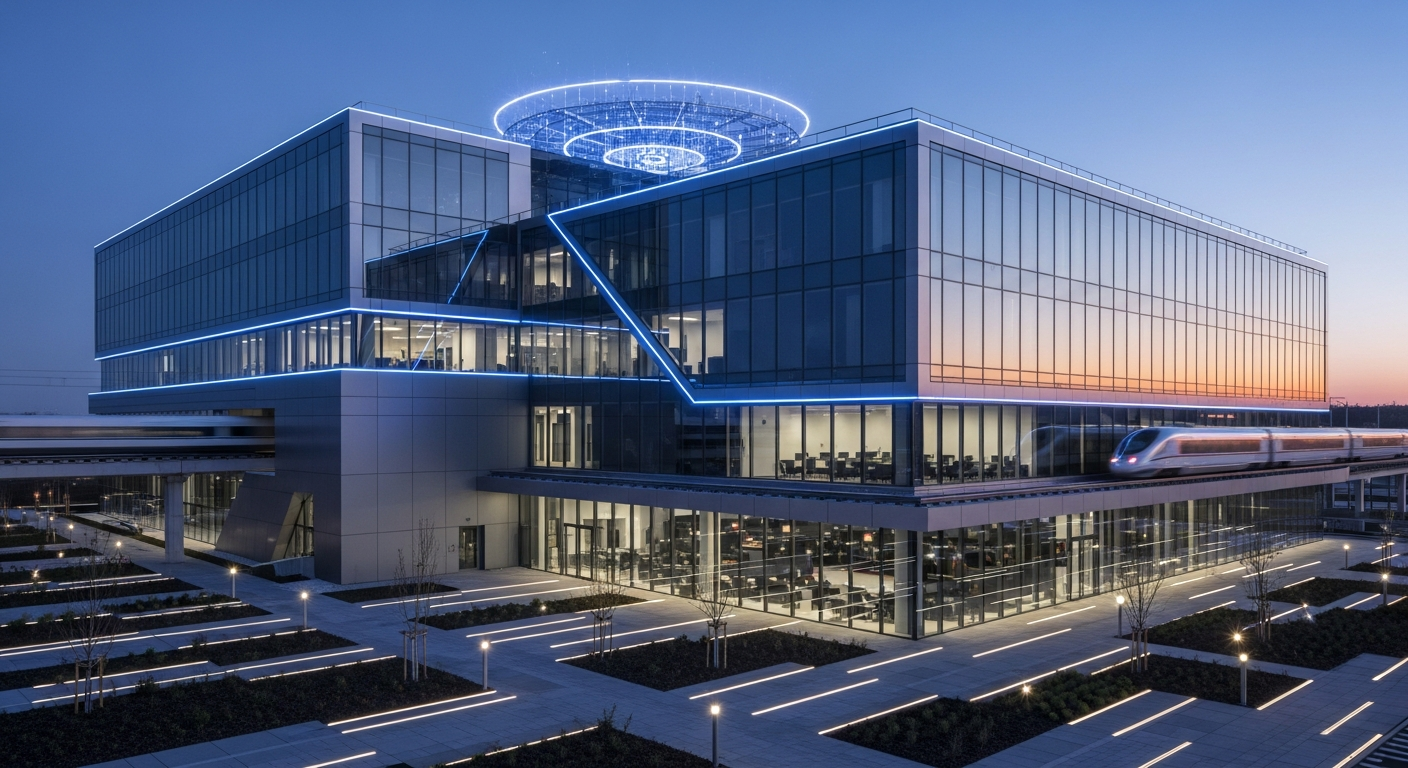
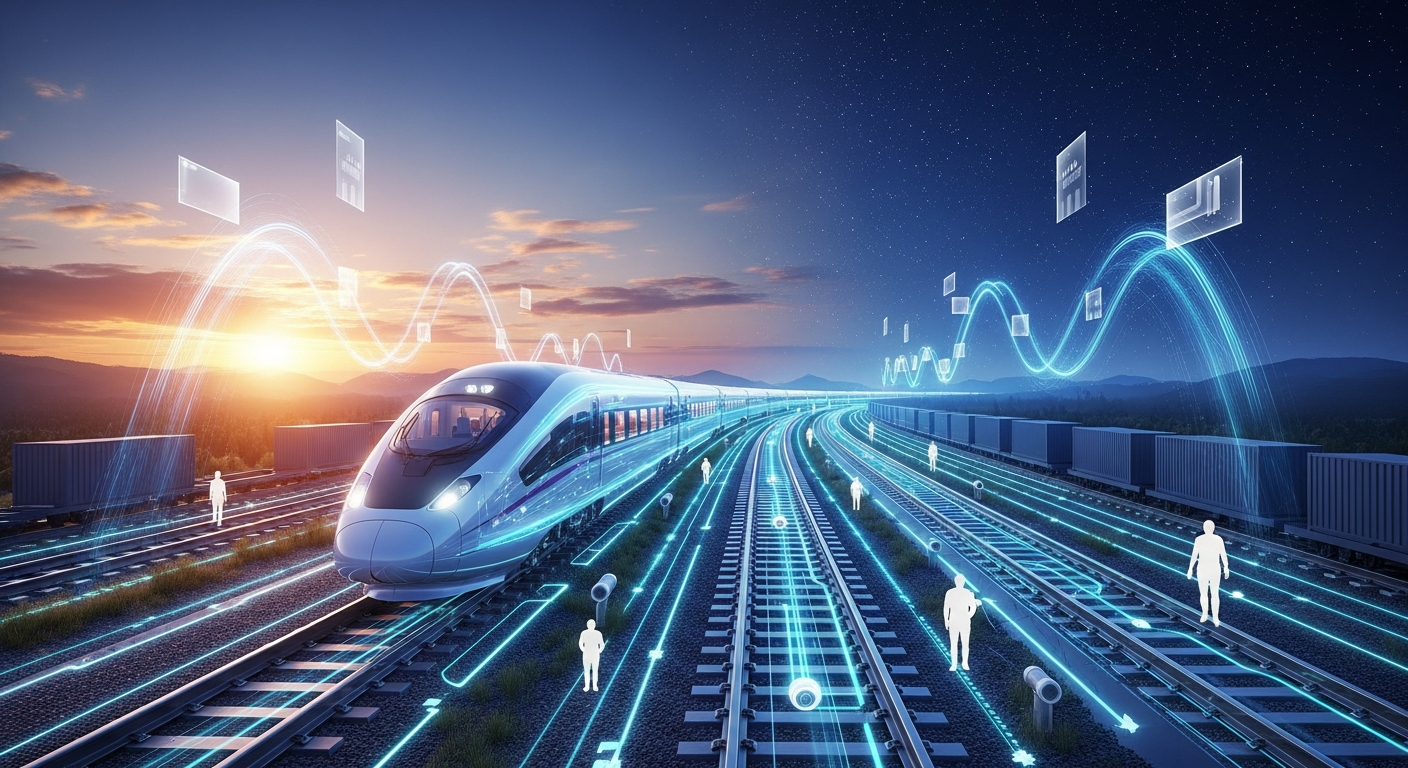
Visual context for learning (fictional, AI-generated). Three views help learners anchor decisions in a believable setting.

FAQ
Short answers to common questions related to Rail Transportation operations and decision readiness.
What does Nano Masters AI Rail Transportation do?
It operates passenger and freight rail services and uses AI to optimize scheduling, routing, disruption recovery, and predictive maintenance to improve punctuality, safety, and cost efficiency.
How does AI reduce delays in rail networks?
AI models forecast demand and conflicts, recommend timetable and routing adjustments, and support real-time re-sequencing during disruptions to minimize total delay minutes and prevent cascading impacts.
What is predictive maintenance in a rail context?
Predictive maintenance uses sensor, inspection, and historical failure data to estimate component health and failure risk, allowing teams to schedule maintenance at the optimal time and reduce unplanned breakdowns.
Who are the primary customers of the company?
The company serves rail passengers and freight shippers, and it works closely with public transport authorities, logistics providers, and intermodal partners that depend on reliable rail capacity and performance reporting.
Contact & information
Website: https://nanomasters.ai/blueprint-company/nano-masters-ai-rail-transportation
Location: Spain
Industry: Rail Transportation