
Nano Masters AI Electric Utility
Nano Masters AI Electric Utility is an advanced power provider that uses artificial intelligence to optimize grid operations, integrate renewable energy, and deliver reliable, efficient electricity. Through real-time forecasting, automated controls, and smart energy management, the company reduces outages, lowers costs, and supports cleaner, more sustainable power for communities and businesses.
About Nano Masters AI Electric Utility
Nano Masters AI Electric Utility is a France-based electric utility modernizing power delivery with artificial intelligence. The company applies real-time forecasting, automated controls, and grid analytics to improve reliability, efficiency, and customer outcomes across diverse service territories. At the core of its approach is an AI-driven operational layer that helps balance supply and demand, anticipate equipment stress, and optimize dispatch decisions. By combining network telemetry, weather inputs, and market signals, Nano Masters AI Electric Utility reduces unplanned outages and improves restoration speed when events occur. The utility is designed for a renewables-heavy future. Its optimization stack supports higher penetration of wind and solar, coordinates distributed energy resources, and enables flexible demand response programs that lower system costs while maintaining grid stability. Nano Masters AI Electric Utility also emphasizes transparent performance management and safety-first operations. Standardized processes, digital work execution, and continuous readiness programs help field teams and control-room operators make consistent, compliant decisions under pressure. By aligning operational excellence with decarbonization, the company supports communities and businesses with cleaner electricity, resilient infrastructure, and data-informed energy services that evolve with changing regulations and customer expectations.
What we offer
AI-optimized electricity generation and procurement, real-time load and renewable forecasting, automated grid controls (voltage/VAR optimization and switching support), outage prediction and restoration analytics, distributed energy resource (DER) coordination, demand response and smart energy management programs, and operational dashboards for grid performance, safety, and compliance.

Who we serve
Nano Masters AI Electric Utility serves residential customers, commercial and industrial facilities, municipalities, and critical infrastructure operators that require high reliability. It also supports renewable developers and prosumer customers through interconnection enablement, DER coordination, and smart tariff or demand response programs.

Inside the business
Nano Masters AI Electric Utility runs a modern utility operating system that connects control-room decisions, field execution, and customer programs through a shared data and automation layer.
Operating model
The company operates an integrated model spanning grid operations (SCADA/EMS/DMS), forecasting and optimization, field workforce execution, and customer energy programs. AI models generate day-ahead and intra-day forecasts, recommend operational setpoints and switching sequences, and prioritize maintenance based on asset health and risk. Human operators remain in the loop with clear guardrails, audit trails, and compliance workflows. Continuous improvement is driven by post-event reviews, model monitoring, and performance scorecards.
Market dynamics
French and European power markets face accelerating electrification, higher renewable penetration, increasing climate-driven weather volatility, and tighter reliability expectations. Utilities must manage congestion, intermittency, and aging infrastructure while meeting decarbonization targets and controlling customer costs. Competitive pressures include new flexibility providers, grid-edge technologies, and evolving regulatory requirements for resilience, cybersecurity, and transparency.
What changed recently (fictional)
Nano Masters AI Electric Utility has expanded its real-time forecasting and automated control capabilities to better manage renewable variability and peak demand events. The company has also strengthened safety and compliance readiness for field operations and accelerated smart energy program rollouts for commercial customers seeking lower bills and emissions.
Key performance metrics (KPIs)
These KPIs reflect what leaders typically track in Electric Utilities. Each metric connects to decisions that drive outcomes.
Decision scenarios (what leaders actually face)
The scenarios below are written to resemble realistic situations in Electric Utilities. They’re designed for practice, discussion, and evaluation — where context, trade-offs, and escalation matter.
A multi-day heatwave drives record air-conditioning demand while wind generation underperforms forecasts. Interconnectors are constrained and reserve margins are tightening. You must decide how to maintain reliability while controlling costs and meeting emissions objectives.
What this scenario reveals
Ability to balance reliability, cost, and sustainability under stress; understanding of flexibility levers, customer impacts, and operational risk controls.
A severe storm causes multiple feeder trips and communication gaps across a region. Field crews are limited, and restoration decisions must consider safety, access constraints, and critical customer sites (hospitals, water treatment).
What this scenario reveals
Decision quality under uncertainty, safety-first thinking, and ability to use data-driven prioritization while maintaining operational discipline.
Common failure points (and why they happen)
Even AI-enabled utilities can fail when data, processes, and people are not aligned. The most common breakdowns happen at the intersections of forecasting, control, field execution, and governance.
Model drift and unmonitored forecast degradation
Changes in customer behavior, DER adoption, or weather patterns can erode model accuracy. Without monitoring, retraining, and clear escalation thresholds, poor forecasts lead to costly procurement decisions and reliability risks.
Automation without operational guardrails
Automated controls that lack constraints, auditability, or human-in-the-loop approvals can create unsafe switching actions, voltage violations, or cascading operational errors during abnormal conditions.
Siloed field and control-room execution
If work orders, switching plans, and real-time grid status are not synchronized, crews may arrive unprepared, duplicate efforts, or face avoidable hazards, slowing restoration and increasing safety exposure.
Compliance gaps in safety-critical work
Permit-to-work processes, lockout/tagout, and regulatory documentation require consistent decision-making. Weak training, inconsistent SOP application, or missing evidence trails can trigger incidents and enforcement actions.
Readiness & evaluation (fictional internal practice)
Readiness is the company’s ability to deliver reliable, safe power while integrating renewables—especially during peak demand and emergency events.
How readiness is checked
Readiness is checked through scenario-based simulations for control-room and field teams, periodic drills for storm response and regulatory audits, validation of SOP application, and continuous measurement of forecasting accuracy, restoration performance, and safety compliance evidence.
What “good” looks like
Good looks like: stable operations within voltage/frequency limits, consistent adherence to switching and safety procedures, accurate forecasts with defined confidence intervals, rapid and prioritized restoration for critical loads, clear escalation paths, and documented decisions that withstand regulatory review.
Example readiness signals
Examples include: improved SAIDI/SAIFI during adverse weather, reduced renewable curtailment, high pass rates in safety-critical role certification, consistent permit-to-work decision quality, and post-incident reviews showing timely escalation and corrective action closure.
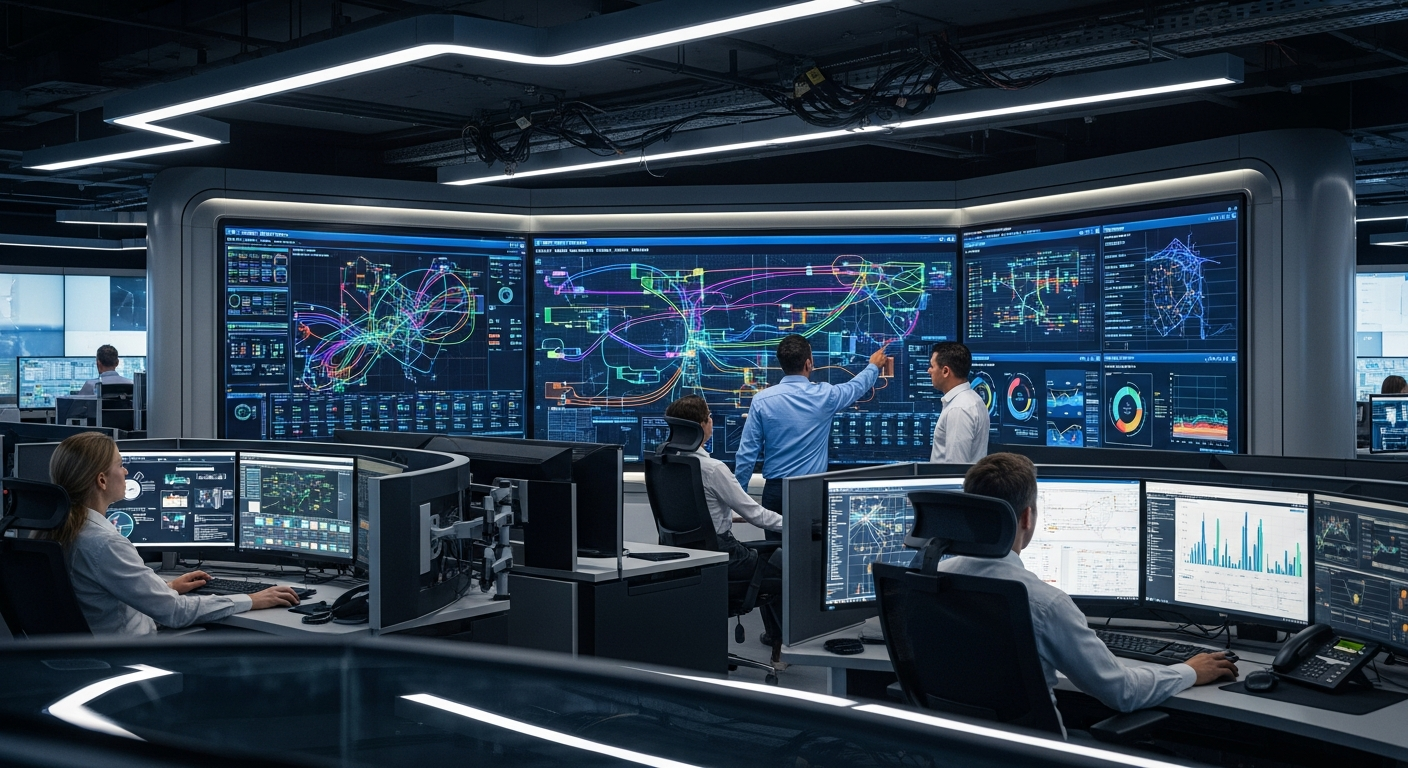
Company images
Visual context for learning (fictional, AI-generated). Three views help learners anchor decisions in a believable setting.


FAQ
Short answers to common questions related to Electric Utilities operations and decision readiness.
What makes Nano Masters AI Electric Utility different from a traditional utility?
It uses AI for real-time forecasting, automated grid controls, and decision support to reduce outages, lower operating costs, and improve renewable integration while keeping humans in the loop for safety and governance.
How does the company support renewable energy integration?
By improving short-term forecasting, optimizing dispatch and voltage/VAR, coordinating distributed energy resources, and using demand response to balance variability without sacrificing reliability.
Who are the primary customers?
Residential customers, commercial and industrial organizations, municipalities, and operators of critical infrastructure that require high reliability and transparent service performance.
How does Nano Masters AI Electric Utility manage safety and compliance?
Through standardized SOPs, permit-to-work discipline, scenario-based training, audit-ready decision trails, and continuous monitoring of safety KPIs and regulatory readiness.
Contact & information
Website: https://nanomasters.ai/blueprint-company/nano-masters-ai-electric-utility
Location: France
Industry: Electric Utilities